
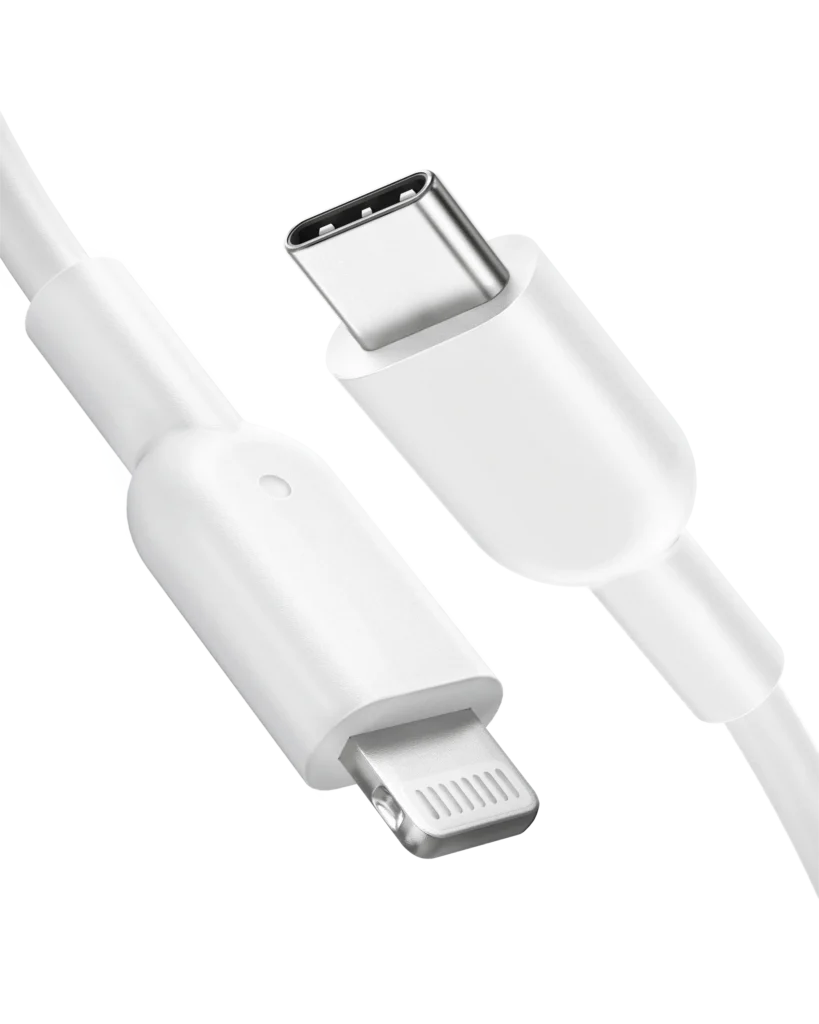
Cabo USB-C de cobre
Os cabos USB-C de cobre convencionais são o tipo mais comum de solução de conetividade USB-C disponível. Utilizam condutores de cobre para transmitir dados e energia, o que os torna adequados para aplicações quotidianas, como carregar dispositivos, transferir ficheiros e ligar periféricos. Embora estejam amplamente disponíveis e sejam económicos, têm limitações em termos de comprimento, velocidade de dados e suscetibilidade a interferências electromagnéticas (EMI).
USB-C AOC (cabo ótico ativo)
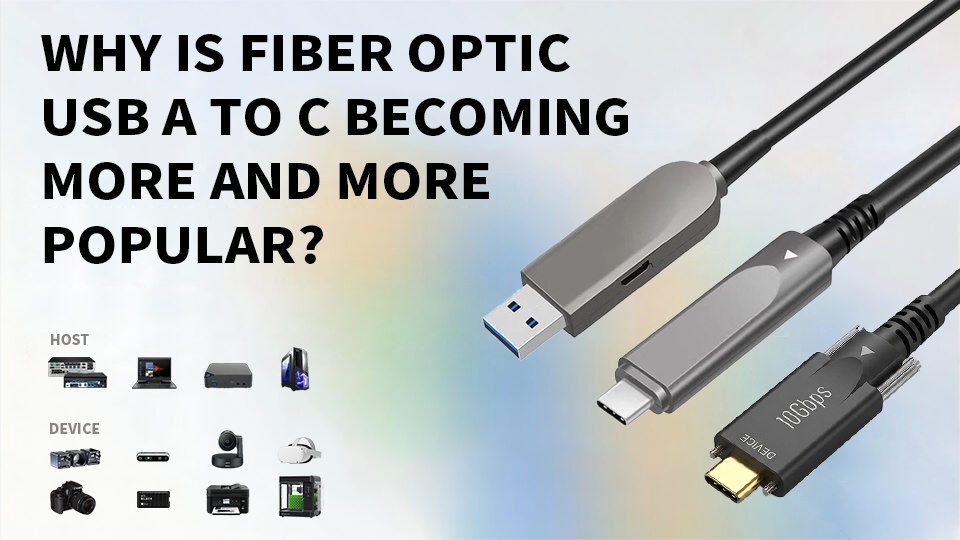
Cabos ópticos activos USB-C (AOCs) são cabos avançados concebidos para aplicações de elevado desempenho. Ao contrário dos cabos convencionais, utilizam fibras ópticas para transmitir dados de alta velocidade, mantendo os condutores de cobre para fornecimento de energia e dados de baixa velocidade para USB2.0 (480 Mbps). Este design híbrido permite que o Cabos ópticos activos USB-C para manter a integridade do sinal em longas distâncias até 15 m (50 pés), transferir velocidades de dados mais rápidas até 10 Gbps, fornecer energia até 100 W e eliminar problemas de interferência. AOC USB-C de fibra ótica são ideais para cenários que exigem elevada largura de banda, transmissão a longa distância e desempenho fiável.

AOCFiberlink lançou recentemente uma solução inovadora Cabo ótico ativo USB-C 8K com todas as funcionalidades apoio:
-AOC+ Tech: 4 vias alternadas DP 1.4
-Vídeo: 8K/60Hz,4K/144Hz UHD
-Dados: 10Gbps para USB3.2
-Potência: 100W PD máximo
-Comprimento: até 15m no máximo
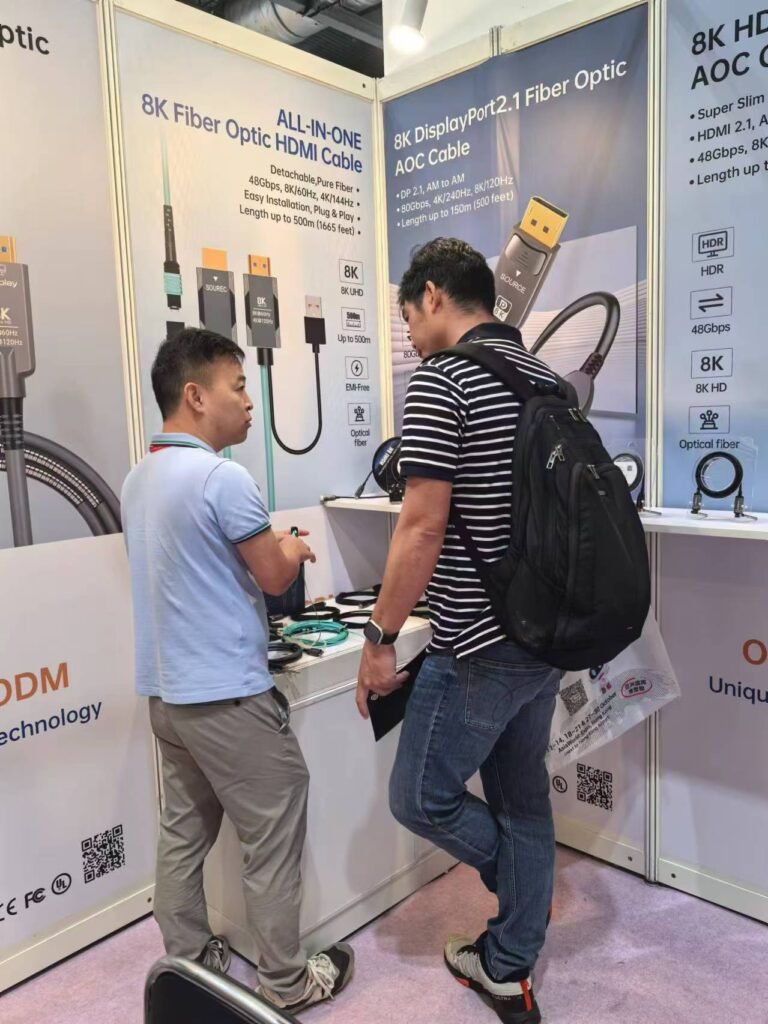
Este FUCC-3202 AOC USB C de fibra ótica 8K com todas as funcionalidades tem sido um sucesso de vendas em mercados como a Índia, o Japão, a Coreia, a Alemanha, os EUA, o Reino Unido, a Grécia e a Itália desde a sua estreia no Hong Kong Electronics Show em 2024.

Cabo USB-C de cobre vs. USB-C AOC (cabo ótico ativo): prós e contras
Cabo USB-C de cobre
Prós:
- Amplamente disponível e com uma boa relação custo-benefício.
- Simples e fácil de utilizar para aplicações standard.
- Suporta a transferência de dados básicos e o fornecimento de energia.
Contras:
- Comprimento limitado: A qualidade do sinal degrada-se em distâncias maiores (normalmente, o máximo é de 2-3 metros).
- Suscetível a EMI: Propenso a interferências electromagnéticas, especialmente em ambientes ruidosos.
- Velocidades mais baixas à distância: O desempenho diminui à medida que o comprimento do cabo aumenta.
USB-C AOC (cabo ótico ativo)
Prós:
- Comprimento alargado: Mantém uma excelente qualidade de sinal em distâncias até 50-100 metros ou mais.
- Velocidades de dados elevadas: Perfeito para aplicações com utilização intensiva de largura de banda, como transmissão de vídeo 4K/8K e transferências rápidas de dados.
- Resistência EMI: Imune a interferências electromagnéticas, ideal para ambientes industriais e ruidosos.
- Fino e flexível: As fibras ópticas tornam o cabo leve e fácil de manusear.
Contras:
- Custo mais elevado: Significativamente mais caro devido à tecnologia avançada.
Eletrónica ativa necessária: Necessita de módulos ópticos activos para converter sinais eléctricos em ópticos e vice-versa, o que aumenta a complexidade.


Principais diferenças entre USB-C de cobre e USB-C AOC
- Meio de transmissão:
- Os cabos USB-C de cobre convencionais utilizam condutores de cobre.
- Cabo ótico ativo USB-C utilizar híbrido fibras ópticas+cobre para a transmissão de dados.
- Distância:
- Os cabos de cobre têm um máximo de 1,8-2 metros para um desempenho ótimo.
- Os cabos ópticos podem atingir comprimentos de 15 metros sem perda de sinal.
- Desempenho:
- Os cabos convencionais têm dificuldade em lidar com dados de elevada largura de banda em longas distâncias.
- Cabo ótico ativo USB-C oferecem um desempenho consistente mesmo para vídeo de alta resolução ou velocidades de dados rápidas.
- Durabilidade em ambientes agressivos:
- Cabo ótico ativo USB-C são imunes a EMI, o que os torna ideais para configurações AV industriais ou profissionais.
Quando escolher qual
Cabos USB-C convencionais:
- Ideal para tarefas quotidianas como:
- Dispositivos de carregamento.
- Ligação de periféricos como teclados, ratos ou unidades de armazenamento.
- Transferências de dados a curta distância.
AOCs USB-C:
- Recomendado para cenários exigentes, tais como:
- Configurações AV de elevado desempenho: Transmissão em fluxo contínuo de conteúdos 4K/8K.
- Ligações de longa distância: Passar cabos através de divisões ou entre dispositivos muito afastados.
- Ambientes com forte EMI: Ambientes industriais ou áreas com elevado ruído elétrico.
Comparação de custos
- Cabo USB-C convencional: Acessível e prático para necessidades de curta distância e de baixa procura.
- Cabo ótico ativo USB-C: Custo inicial mais elevado, mas vale a pena pelo desempenho e fiabilidade alargados em ambientes profissionais.
Resumo
Escolher cabos USB-C convencionais para uma simplicidade quotidiana e um preço acessível. Opte por Cabo ótico ativo USB-C quando é necessário um desempenho de topo, capacidade de longa distância e resistência EMI. A decisão depende do seu caso de utilização específico e do seu orçamento.
Cabos ópticos activos USB-C AOCFiberlink


Sobre nós
No AOCFiberlink, nos especializamos na fabricação de alta qualidade cabos USB de fibra ótica & cabos HDMI de fibra ótica que satisfazem as exigências dos sistemas audiovisuais modernos. Os nossos fibra ótica USB & Cabos HDMI foram concebidos para proporcionar um desempenho sem compromissos, garantindo que desfruta do verdadeiro potencial dos seus dispositivos de alta definição.
Para além da norma Cabos HDMI de fibra ótica & Cabos USB de fibra ótica, A nossa empresa também fornece soluções à medida das necessidades específicas dos clientes.
Não hesite em contactar-nos.
Também pode subscrever a nossa Canal do Youtube para ficar atento.