
USB-C-Kabel aus Kupfer
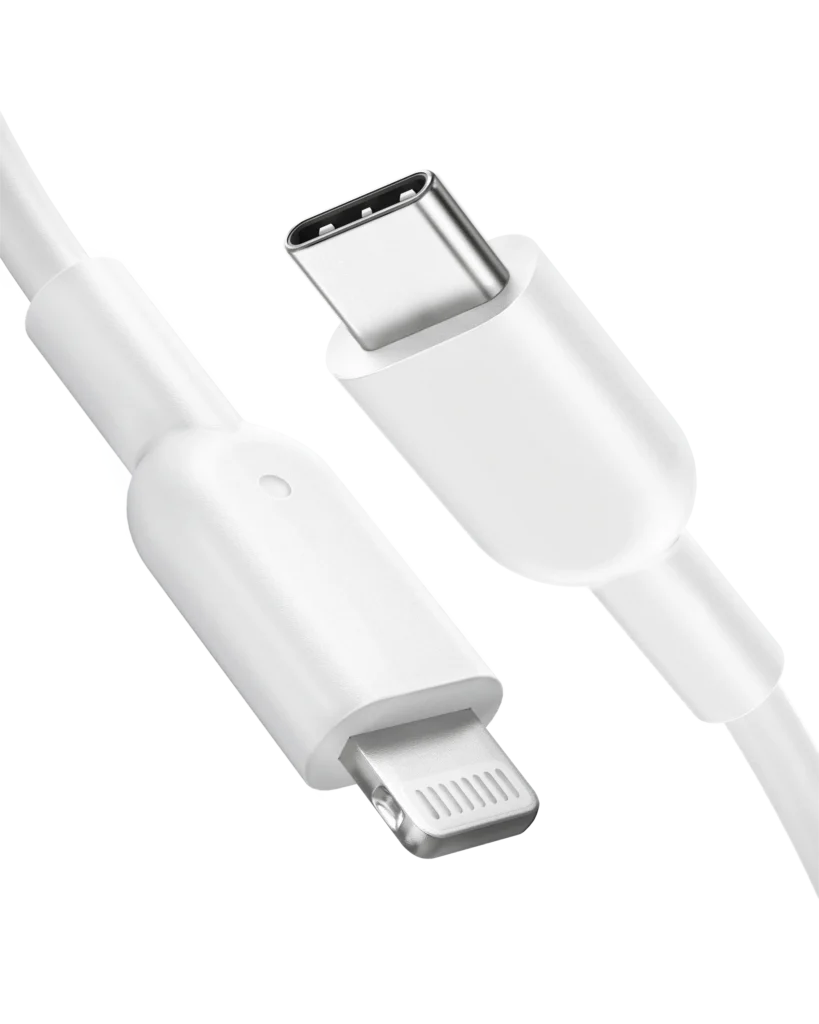
Herkömmliche USB-C-Kupferkabel sind die gängigste Art von USB-C-Verbindungslösungen. Sie verwenden Kupferleiter zur Übertragung von Daten und Strom und eignen sich daher für alltägliche Anwendungen wie das Aufladen von Geräten, die Übertragung von Dateien und den Anschluss von Peripheriegeräten. Sie sind zwar weithin verfügbar und kostengünstig, haben aber Einschränkungen in Bezug auf Länge, Datengeschwindigkeit und Anfälligkeit für elektromagnetische Störungen (EMI).
USB-C AOC (Aktives Optisches Kabel)
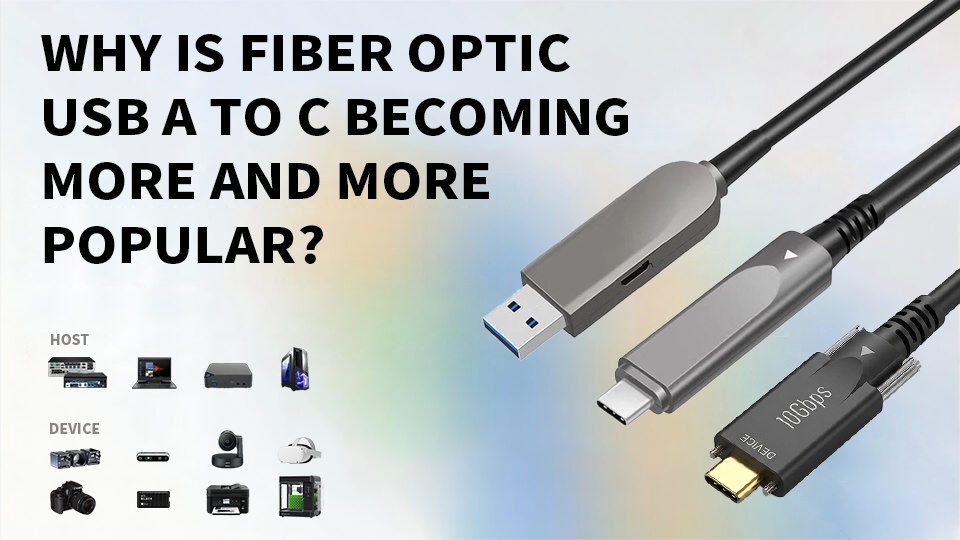
Aktive optische USB-C-Kabel (AOCs) sind fortschrittliche Kabel, die für Hochleistungsanwendungen entwickelt wurden. Im Gegensatz zu herkömmlichen Kabeln verwenden sie optische Fasern für die Übertragung von Hochgeschwindigkeitsdaten, während Kupferleiter für die Stromversorgung und Daten mit niedriger Geschwindigkeit für USB2.0 (480Mbps) beibehalten werden. Dieses Hybriddesign ermöglicht die Aktive optische USB-C-Kabel zur Aufrechterhaltung der Signalintegrität über große Entfernungen von bis zu 15 m (50 ft), zur Übertragung von Datengeschwindigkeiten von bis zu 10 Gbit/s, zur Stromversorgung mit bis zu 100 W und zur Beseitigung von Interferenzproblemen. Lichtwellenleiter USB-C AOC sind ideal für Szenarien, die eine hohe Bandbreite, eine Übertragung über große Entfernungen und eine zuverlässige Leistung erfordern.

AOCFiberlink hat vor kurzem ein revolutionäres Aktives optisches 8K-USB-C-Kabel mit vollem Funktionsumfang unterstützen:
-AOC+ Tech: 4 Fahrspuren abwechselnd DP 1.4
-Video: 8K/60Hz,4K/144Hz UHD
-Daten: 10Gbps für USB3.2
-Leistung: 100 W PD maximal
-Länge: bis zu 15 m maximal
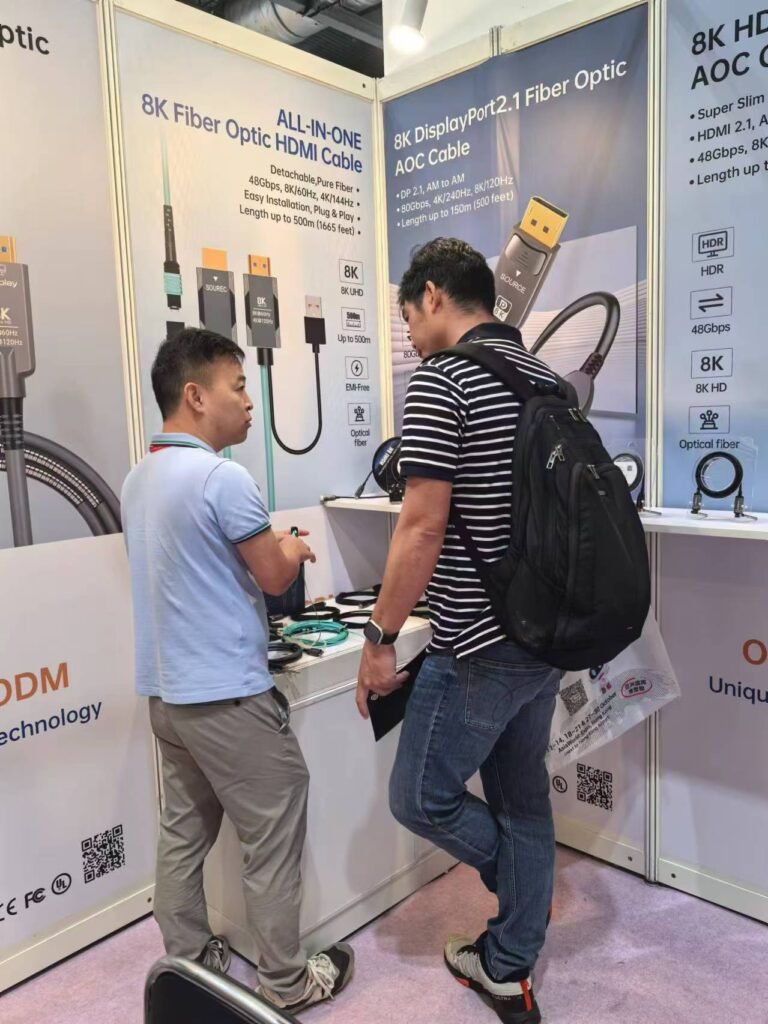
Diese FUCC-3202 voll funktionsfähiger 8K Glasfaser-USB-C-AOC ist seit seinem Debüt auf der Hong Kong Electronics Show 2024 ein Verkaufsschlager in Märkten wie Indien, Japan, Korea, Deutschland, USA, Großbritannien, Griechenland und Italien.

Kupfer-USB-C-Kabel vs. USB-C AOC (Active Optical Cable): Vor- und Nachteile
USB-C-Kabel aus Kupfer
Vorteile:
- Weithin verfügbar und kostengünstig.
- Einfach und leicht zu bedienen für Standardanwendungen.
- Unterstützt grundlegende Datenübertragung und Stromversorgung.
Nachteile:
- Begrenzte Länge: Die Signalqualität verschlechtert sich bei größeren Entfernungen (in der Regel maximal 2-3 Meter).
- Empfindlich gegen EMI: Anfällig für elektromagnetische Störungen, insbesondere in lauten Umgebungen.
- Niedrigere Geschwindigkeiten über die Entfernung: Die Leistung nimmt mit zunehmender Kabellänge ab.
USB-C AOC (Aktives Optisches Kabel)
Vorteile:
- Erweiterte Länge: Erhält eine hervorragende Signalqualität über Entfernungen von 50-100 Metern oder mehr.
- Hohe Datengeschwindigkeiten: Ideal für bandbreitenintensive Anwendungen wie 4K/8K-Video-Streaming und schnelle Datenübertragungen.
- EMI-Widerstand: Unempfindlich gegen elektromagnetische Störungen, ideal für industrielle und laute Umgebungen.
- Schlank und flexibel: Dank der optischen Fasern ist das Kabel leicht und einfach zu handhaben.
Nachteile:
- Höhere Kosten: Deutlich teurer aufgrund der fortgeschrittenen Technologie.
Aktive Elektronik erforderlich: Erfordert aktive optische Module zur Umwandlung elektrischer Signale in optische Signale und zurück, was die Komplexität erhöht.


Hauptunterschiede zwischen Kupfer-USB-C und USB-C AOC
- Übertragungsmedium:
- Herkömmliche USB-C-Kupferkabel verwenden Kupferleitern.
- Aktives optisches USB-C-Kabel Hybrid verwenden optische Fasern+Kupfer für die Datenübertragung.
- Entfernung:
- Kupferkabel haben eine maximale Länge von 1,8 bis 2 Metern für eine optimale Leistung.
- Optische Kabel können Längen von 15 Metern ohne Signalverlust erreichen.
- Leistung:
- Herkömmliche Kabel haben Probleme mit der Übertragung von Daten mit hoher Bandbreite über große Entfernungen.
- Aktives optisches USB-C-Kabel liefern auch bei hochauflösenden Videos oder hohen Datengeschwindigkeiten eine konstante Leistung.
- Langlebigkeit in rauen Umgebungen:
- Aktives optisches USB-C-Kabel sind immun gegen EMI, was sie ideal für industrielle oder professionelle AV-Einrichtungen macht.
Wann man was wählt
Konventionelle USB-C-Kabel:
- Am besten für alltägliche Aufgaben wie:
- Geräte aufladen.
- Anschluss von Peripheriegeräten wie Tastaturen, Mäusen oder Speicherlaufwerken.
- Datenübertragung über kurze Entfernungen.
USB-C AOCs:
- Empfohlen für anspruchsvolle Szenarien, wie z. B.:
- Leistungsstarke AV-Setups: Streaming von 4K/8K-Inhalten.
- Fernverkehrsverbindungen: Verlegung von Kabeln quer durch Räume oder zwischen weit voneinander entfernten Geräten.
- EMI-lastige Umgebungen: Industrielle Umgebungen oder Bereiche mit hohem elektrischem Lärm.
Kostenvergleich
- Konventionelles USB-C-Kabel: Erschwinglich und praktisch für kurze Strecken und geringen Bedarf.
- Aktives optisches USB-C-Kabel: Höhere Anschaffungskosten, aber es lohnt sich für die erweiterte Leistung und Zuverlässigkeit in professionellen Umgebungen.
Zusammenfassung
Wählen Sie herkömmliche USB-C-Kabel für den einfachen und erschwinglichen Alltag. Entscheiden Sie sich für Aktives optisches USB-C-Kabel wenn Sie erstklassige Leistung, Langstreckentauglichkeit und EMI-Beständigkeit benötigen. Die Entscheidung hängt von Ihrem spezifischen Anwendungsfall und Ihrem Budget ab.
AOCFiberlink USB-C Aktive optische Kabel


Über uns
Bei AOCFiberlinkWir sind auf die Herstellung hochwertiger Produkte spezialisiert faseroptische USB-Kabel & faseroptische HDMI-Kabel die den Anforderungen moderner audiovisueller Systeme gerecht werden. Unser Glasfaser-USB & HDMI-Kabel sind auf kompromisslose Leistung ausgelegt, damit Sie das volle Potenzial Ihrer High-Definition-Geräte nutzen können.
Neben dem Standard HDMI-Glasfaserkabel & Glasfaser-USB-Kabeln, Wir bieten auch maßgeschneiderte Lösungen für kundenspezifische Anforderungen.
Bitte zögern Sie nicht, uns zu kontaktieren.
Sie können sich auch für unsere Youtube-Kanal um auf dem Laufenden zu bleiben.