
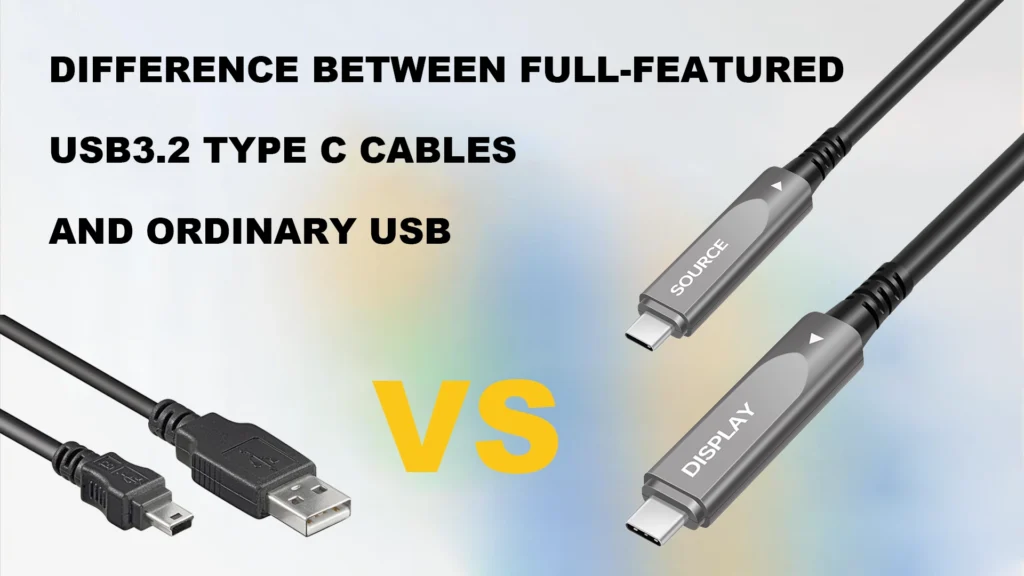
Desde 1996, a norma de sinalização USB tem continuado a evoluir à medida que as necessidades tecnológicas aumentam. Cada nova versão da norma é um aperfeiçoamento da tecnologia da geração anterior, com o objetivo de melhorar e aperfeiçoar as capacidades anteriores. Mesmo o Fórum de Implementadores USB (USB-IF) lançou recentemente o USB 4 norma de sinalização. No entanto, a atual tecnologia de cabo só pode suportar USB 3.2 ou USB 3.1, na melhor das hipóteses.
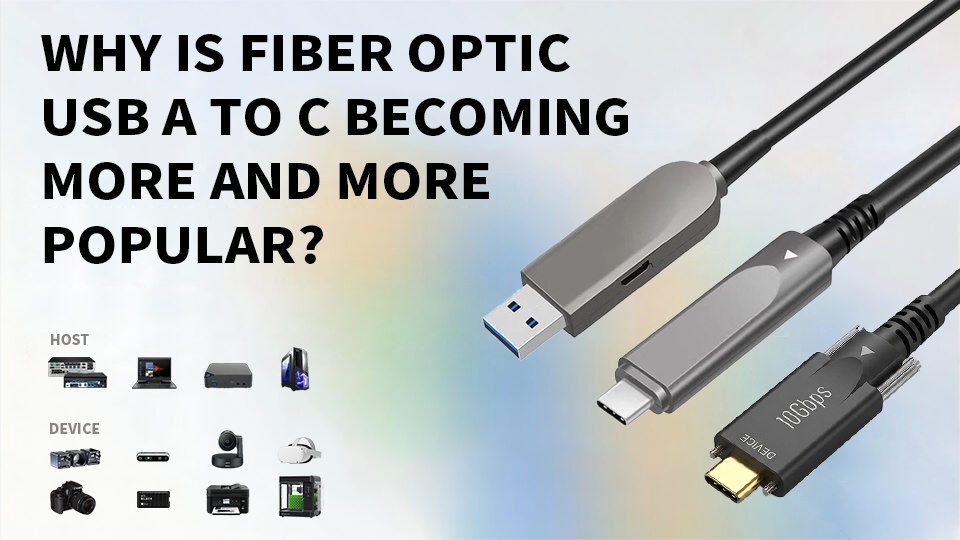
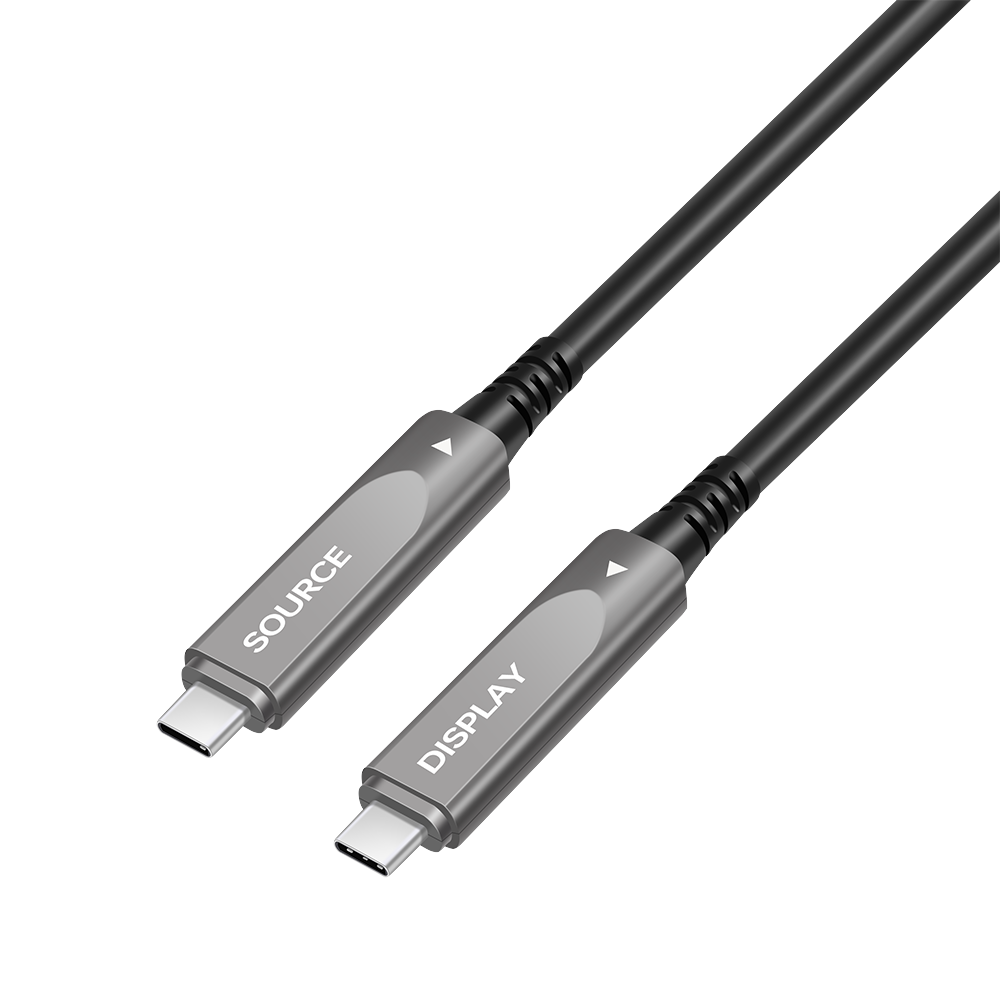
Entre eles, o Cabo USB 3.2 Tipo C para Tipo C de fibra ativa com todas as funcionalidades reflecte os resultados da evolução da tecnologia USB. Não só tem velocidades de transmissão mais rápidas, como também melhora significativamente a comodidade de utilização e a compatibilidade dos dispositivos. Em comparação com os cabos USB normais, este cabo USB C ótico de 8K com todas as funcionalidades pode lidar com energia, áudio, vídeo e dados, tudo ao mesmo tempo. Isto significa que os utilizadores podem carregar computadores portáteis e smartphones, transmitir áudio e vídeo do telefone para o monitor e carregar e transferir unidades flash USB através do mesmo cabo. E os cabos USB normais são normalmente responsáveis apenas pelo carregamento ou pela transferência de dados e, mais importante ainda, limitados a 2 m de comprimento. Mas o nosso FUCC-3202 Cabo USB C para C AOC de fibra ótica 8K com todas as funcionalidades apoio:
-AOC+ Tech: 4 vias alternadas DP 1.4
-Vídeo: 8K/60Hz,4K/144Hz UHD
-Dados: 10Gbps para USB3.2
-Potência: 100W PD máximo
-Comprimento: até 15m no máximo
Seguem-se as diferenças específicas em vários aspectos entre os Cabo USB 3.2 Tipo C para Tipo C de fibra ativa com todas as funcionalidades e cabos USB normais:
1. Velocidade de transmissão de dados
O cabo USB3.2 Tipo C de fibra ótica de função completa pode cumprir a norma de transmissão USB3.2 com o apoio da transmissão de alta velocidade e das caraterísticas de atenuação zero da fibra ótica, de modo a que o cabo possa alcançar uma transmissão de dados de alta velocidade de 10 Gbps a longa distância. Os cabos USB3.0 normais estão limitados pelas suas interfaces e o material do cabo é o latão. A velocidade de transmissão não pode ser comparada com a velocidade da luz da fibra ótica e não pode transmitir sinais a longas distâncias, pelo que a sua taxa de transmissão só pode atingir 5 Gbps. O anterior USB2.0 só pode atingir 480 Mbps. O seu comprimento só pode atingir, no máximo, 5 m (16 pés). Se for maior, terá problemas como a atenuação grave do sinal e as interferências electromagnéticas.
O nosso cabo USB3.2 C para C totalmente funcional suporta a personalização de até 15 m (60 pés).

2. Alimentação eléctrica e desempenho de carregamento
Em termos de transmissão de energia, podem suportar até 100 W de alimentação eléctrica, dependendo do suporte do dispositivo e da qualidade do cabo. O protocolo Power Delivery permite que os dispositivos negoceiem dinamicamente os requisitos de energia, permitindo que os dispositivos sejam carregados rapidamente.
O nosso Cabo USB3.2 Tipo C ativo com todas as funcionalidades também suporta uma fonte de alimentação até 100W, que pode suportar PD100W para 5m, PD70W para 10m, PD60W para 15m.

3. Tipo de interface e compatibilidade
A interface Tipo C do cabo USB3.2 Tipo C completo suporta um design simétrico de ligação e desligamento bidirecional. Pode ser inserido de ambos os lados. Em comparação com as interfaces USB normais, elimina o problema da direção de ligação, melhora a comodidade de utilização e reduz o risco de danos na interface. Em termos de compatibilidade, a interface Tipo C tornou-se a norma preferida para dispositivos modernos, suportando uma variedade de dispositivos modernos, incluindo smartphones, tablets, computadores portáteis, monitores, etc. Também pode ser retrocompatível com USB-A, HDMI e outras interfaces de dispositivos mais antigos através de adaptadores, e também suporta DisplayPort, Thunderbolt e outros protocolos. Uma interface suporta a transmissão de dados, a saída de vídeo, a transmissão de áudio e a alimentação eléctrica. A interface USB normal tem uma função relativamente simples. A USB-A é utilizada principalmente no lado do anfitrião (como a porta USB do computador) e suporta apenas a transmissão de dados e a fonte de alimentação básica; a USB-B é utilizada principalmente para periféricos, como impressoras, e a Micro-USB é utilizada principalmente para câmaras e discos rígidos, etc., com uma capacidade de alimentação limitada, normalmente até 10W.
O nosso cabo de fibra USB3.2 Tipo C completo tem 4 vias Displayport 1.4 Alt e pode também suportar resoluções de vídeo de 8K@60Hz e 4K@144Hz.

4. Capacidade anti-interferência e estabilidade
Para além dos requisitos da norma USB, o cabo Fiber Active USB3.2 completo utiliza fibra ótica como meio de transmissão, o que faz com que o cabo tenha uma capacidade super forte de interferência anti-electromagnética e de interferência de radiofrequência e estabilidade de transmissão de sinal.
A transmissão por fio de cobre utilizada pelo USB comum é particularmente suscetível a interferências electromagnéticas e de radiofrequência provenientes de linhas eléctricas, aparelhos eléctricos, routers e outros equipamentos existentes no ambiente.
Para além de utilizar a transmissão por fibra ótica, o nosso cabo Fiber Active USB3.2 C para C completo também inclui conchas de liga de zinco e conectores banhados a ouro resistentes à corrosão em ambas as extremidades, tornando o cabo anti-interferência e durável.
5. Feedback do utilizador e verificação do desempenho
A versatilidade e a eficiência do cabo USB3.2 Tipo C completo tornaram-no cada vez mais popular entre os utilizadores. Simplifica as ligações de dispositivos no entretenimento doméstico e reduz a confusão de cabos, o que tem sido amplamente reconhecido por muitos utilizadores comuns. Os profissionais gostam do seu desempenho de transmissão de dados a alta velocidade, que torna o processamento de ficheiros grandes mais eficiente. E em termos de escritório móvel, os utilizadores acreditam que o cabo USB completo torna mais conveniente carregar os seus computadores portáteis e ligar periféricos em movimento, melhorando a sua flexibilidade de trabalho.
Em contrapartida, a opinião dos utilizadores sobre os cabos USB normais centra-se na durabilidade e na acessibilidade. Embora tenha menos funções integradas e só seja adequado para ligar dispositivos de uso diário, como teclados, ratos e impressoras, o seu preço é relativamente barato e pode satisfazer as necessidades básicas de ligação.
6. Considerações sobre a compra
Se necessita de um elevado desempenho e de multifunções, o cabo USB tipo C completo é a melhor escolha. Só é necessário um cabo para obter uma transmissão de dados de alta velocidade, saída de vídeo de alta definição e carregamento rápido.
Se apenas necessitar de alguns requisitos de ligação simples e básicos, sem demasiados requisitos em termos de velocidade de transmissão de dados e eficiência de carregamento, e apenas o utilizar para um dispositivo único ou especial, como um teclado, rato, impressora, etc., pode escolher um USB normal.
Em geral, a escolha do cabo USB deve basear-se nas necessidades específicas de utilização para garantir o melhor desempenho e comodidade.
Em conclusão, o cabo de fibra USB 3.2 Tipo C completo tornou-se a melhor escolha para ligações de dispositivos modernos com a sua transmissão de dados a alta velocidade, versatilidade e ampla compatibilidade. O seu excelente desempenho na transmissão de energia, saída de vídeo e anti-interferência é especialmente adequado para utilizadores que necessitam de elevado desempenho e versatilidade. Este cabo reduz as ligações redundantes entre dispositivos, melhora a experiência geral do utilizador e proporciona um método de ligação simplificado.
Além disso, a tecnologia USB evoluirá para velocidades mais elevadas, maior largura de banda e maior integração funcional. Com a introdução da norma USB4 e o avanço da tecnologia de fabrico de hardware de cabos, a taxa de transmissão de dados poderá atingir 40 Gbps no futuro, melhorando ainda mais a eficiência da comunicação entre dispositivos. Além disso, com a popularização da Internet das Coisas e dos dispositivos inteligentes, a interface USB continuará a evoluir no sentido da tendência de multifuncionalidade e inteligência, suportando mais protocolos e interfaces e conseguindo uma ligação perfeita com diferentes dispositivos. A melhoria da eficiência de carregamento, da segurança e da experiência do utilizador também se tornará o foco do desenvolvimento futuro, promovendo a inovação contínua da tecnologia USB. O cabo USB de fibra ativa com todas as funcionalidades será mais popular.
Se quiser experimentar o elevado desempenho e a versatilidade do cabo USB de fibra ativa completo, pode dar uma vista de olhos ao novo cabo USB3.2 tipo C para tipo C de fibra ativa completo que se segue:
FAQ
P1: O USB 3.2 faz alguma diferença?
R1: Sim, o USB 3.2 é significativamente diferente das versões anteriores. Permite velocidades de transferência de dados mais rápidas, até 10/20 Gbps em distâncias mais longas, e suporta várias funcionalidades em simultâneo, como fornecimento de energia, vídeo de alta resolução e áudio. Isto aumenta a comodidade e a compatibilidade com uma vasta gama de dispositivos modernos.
P2: O USB 3.2 é o mesmo que o USB A?
R2: Não, o USB 3.2 é uma norma de sinalização que pode ser utilizada com uma variedade de tipos de conectores, incluindo o USB tipo C, que suporta velocidades mais elevadas e mais funcionalidades. O USB A, por outro lado, é um tipo de conetor que é geralmente utilizado para tarefas mais simples, como a transferência de dados e a alimentação básica.
P3: Posso ligar uma porta USB 2.0 a uma porta 3.2?
R3: Sim, pode ligar dispositivos USB 2.0 a portas USB 3.2, uma vez que as portas USB são geralmente compatíveis com as normas mais antigas. No entanto, tem de se certificar de que os tipos de conetor correspondem (por exemplo, utilizar uma ficha Tipo A com uma porta Tipo A) e, embora o USB 2.0 possa ser ligado a uma porta USB 3.2, estará limitado pelo USB 2.0 e não poderá utilizar algumas das novas funcionalidades do USB 3.2. A velocidade de transferência também é de apenas 480 Mbps do USB 2.0.
P4: Para que devo utilizar o USB 3.2?
A4: O USB 3.2 é ótimo para transferência de dados a alta velocidade, carregamento rápido de dispositivos e ligação de uma vasta gama de dispositivos modernos. Também pode efetuar transferências de vídeo e áudio. É excelente para tarefas que requerem uma elevada largura de banda de dados e desempenho, bem como para tarefas de projeção de transmissão de áudio e vídeo entre dispositivos de fonte de dados e dispositivos de visualização.
Q5: O USB 4.0 está disponível?
A5: A norma USB 4 foi lançada, mas a atual tecnologia de cabos suporta geralmente até USB 3.2. À medida que a tecnologia continua a avançar, espera-se que os cabos e dispositivos que suportam USB 4 se tornem mais amplamente disponíveis.
P6: USB 3.2 é o mesmo que Thunderbolt?
A6: Não, o USB 3.2 e o Thunderbolt são tecnologias diferentes. O Thunderbolt oferece geralmente taxas de transferência de dados mais elevadas e funcionalidades adicionais em comparação com o USB 3.2, mas os cabos e portas USB-C suportam ambas as normas devido à interface física partilhada.
Sobre nós
No AOCFiberlink, nos especializamos na fabricação de alta qualidade cabos USB de fibra ótica & cabos HDMI de fibra ótica que satisfazem as exigências dos sistemas audiovisuais modernos. Os nossos fibra ótica USB & Cabos HDMI foram concebidos para proporcionar um desempenho sem compromissos, garantindo que desfruta do verdadeiro potencial dos seus dispositivos de alta definição.
Para além da norma Cabos HDMI de fibra ótica & Cabos USB de fibra ótica, A nossa empresa também fornece soluções à medida das necessidades específicas dos clientes.
Não hesite em contactar-nos.
Também pode subscrever a nossa Canal do Youtube para ficar atento.